Turn the page

Pageturner Recipes with EAT-THE-RAINBOW

X

Cookbooks from Apple to zucchini

What Colors Can You Eat? The Science of a Colorful Plate
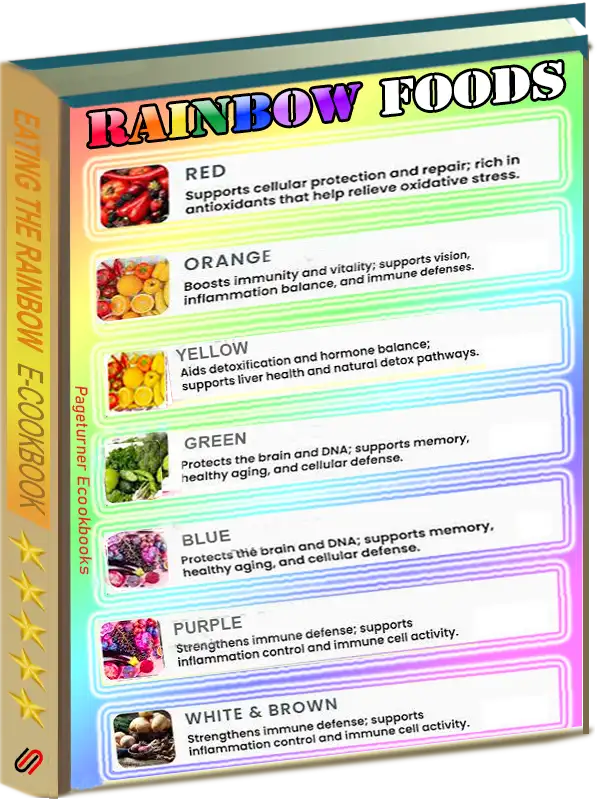
The concept of "eating the rainbow” is a simple metaphor for achieving nutritional diversity through the visual spectrum of food. Color in fruits and vegetables is not merely decorative; it serves as a reliable visual cue for the presence of specific, beneficial compounds. These compounds, known as phytonutrients, are plant-derived chemicals that contribute to the plant’s survival and offer various health-supporting properties when consumed by humans. Understanding the science behind these natural pigments can transform the daily act of eating into a deliberate strategy for wellness. The colors on a plate signal a complex array of biological activity, from antioxidant protection to support for specific organ systems.
The Health Roles of Food Pigments The vibrant hues in produce are created by distinct classes of pigments, each associated with unique biological functions in the human body. Red and pink foods, such as tomatoes, watermelon, and pink grapefruit, owe their color primarily to lycopene, a powerful antioxidant belonging to the carotenoid family. Lycopene is recognized for its ability to protect cells from free radical damage and has been linked to supporting bone strength and cardiovascular health. Other red foods, like berries and grapes, contain anthocyanins, which are flavonoids studied for their potential to support heart health and improve blood flow.
Orange and yellow foods are rich in other types of carotenoids, including beta-carotene, which the body can convert into Vitamin A. This conversion is important for maintaining healthy vision and supporting immune function. Lutein and zeaxanthin, two yellow-hued carotenoids found in corn and egg yolks, are particularly concentrated in the macula of the eye. These pigments act as a natural filter, absorbing high-energy blue light and helping to protect the retina from photo-damage.
The deep green color of leafy vegetables comes from chlorophyll, but the health benefits are often attributed to other compounds present, such as lutein and zeaxanthin, which are abundant in kale and spinach. These green foods also contain compounds that support detoxification processes in the body. Blue and purple foods, including blueberries, blackberries, and purple cabbage, are intensely colored by anthocyanins. These pigments are associated with supporting cognitive function and possessing anti-inflammatory properties that benefit the brain.
Foods that lack intense color, such as white and tan varieties like garlic, onions, and cauliflower, still contain important phytonutrients. Garlic and onions contain organosulfur compounds, such as allicin, which is released when the cloves are crushed or chopped. Allicin has been studied for its antimicrobial activity and its potential to support cardiovascular health. Onions also contain quercetin, a flavonoid that acts as an antioxidant and may help prevent plaque buildup in the arteries.
How Color Affects Perception and Appetite Beyond the nutritional content, the color of food profoundly influences how the brain perceives taste, flavor intensity, and satiety. Before a food is smelled or tasted, its color sets an expectation that can override actual sensory input. For example, a bright red color is often associated with ripeness and sweetness, while green can signal freshness or bitterness.
Studies have shown that if a drink’s color does not match its flavor, the brain may struggle to correctly identify the taste. This phenomenon demonstrates that visual cues are processed first, influencing the overall eating experience and perceived flavor intensity. More intensely colored foods are often perceived as having a more concentrated flavor, even when the actual concentration is the same.
Color also plays a role in regulating appetite and portion control, a concept widely used in food marketing. Warm colors like red and yellow are known to stimulate appetite, which is why they are frequently used in restaurant logos and food packaging. Conversely, blue is one of the rarest colors in natural foods and is sometimes associated with appetite suppression.
conversion of liquids
Type a value in one of the inputs below to convert into other units.
Liters - l
Déciliters - dl
Centiliters - cl
Milliliters - ml
USA
UK, Canada
Gallons - gal
Pints - pt
Cups - c
Ounces liquids - fl oz
Tablespoons - tbsp
Teaspoons - tsp
Weights
Type a value in one of the inputs below to convert into other units..

Kilogramms :  kg
Gramms :  g
Pounds :  lb
Ounces :  oz

Temperatures

Type a value in one of the inputs below to convert into other units.

Degrees Celsius :  °C
degrees Fahrenheit :  °F

Measures of non liquid ingredients


Non-liquid ingredients in volume converted
into weight using the table below.
For products not included, use a metric scale
Weight of specific 'ingredients in grams

Ingredient

1 cup

3/4 cup

2/3 cup

1/2 cup

1/3 cup

1/4 cup

2 tablespoons

All-purpose wheat flour 120 g 90 g 80 g 60 g 40 g 30 g 15 g
All-purpose sifted wheat flour 110 g 80 g 70 g 55 g 35 g 27 g 13 g
White sugar 200 g 150 g 130 g 100 g 65 g 50 g 25 g
Powdered sugar/Icing sugar 100 g 75 g 70 g 50 g 35 g 25 g 13 g
Brown sugar normally packed 180 g 135 g 120 g 90 g 60 g 45 g 23 g
Corn flour 160 g 120 g 100 g 80 g 50 g 40 g 20 g
Cornstarch 120 g 90 g 80 g 60 g 40 g 30 g 15 g
Rice (not-cooked) 190 g 140 g 125 g 95 g 65 g 48 g 24 g
Macaroni (uncooked) 140 g 100 g 90 g 70 g 45 g 35 g 17 g
Couscous (uncooked) 180 g 135 g 120 g 90 g 60 g 45 g 22 g
Quick oatmeal (uncooked) 90 g 65 g 60 g 45 g 30 g 22 g 11 g
Table salt 300 g 230 g 200 g 150 g 100 g 75 g 40 g
Butter / Margarine 240 g 180 g 160 g 120 g 80 g 60 g 30 g
Shortening 190 g 140 g 125 g 95 g 65 g 48 g 24 g
Fruits and légumes chopped 150 g 110 g 100 g 75 g 50 g 40 g 20 g
chopped walnuts 150 g 110 g 100 g 75 g 50 g 40 g 20 g
Nuts /ground almonds 120 g 90 g 80 g 60 g 40 g 30 g 15 g
Fresh bread crumbs (not packed) 60 g 45 g 40 g 30 g 20 g 15 g 8 g
Dry bread crumbs 150 g 110 g 100 g 75 g 50 g 40 g 20 g
Parmesan grated 90 g 65 g 60 g 45 g 30 g 22 g 11 g
Chocolate chips 150 g 110 g 100 g 75 g 50 g 38 g  19 g
  • Mediterranean Complete E-cookbook
  • Italy Complete E-cookbook
  • France Complete E-cookbook
  • Spain Complete E-cookbook
  • Canada Complete E-cookbook
  • USA Complete E-cookbook
1 2 3 4 5 6
Last page
eat-the-rainbow
{Page-Turner} Library
on a world cooking journey.


Loading


ecookbook Recipes